|
If you would like to contact me, you can at lesh@leshatton.org
or through the contact points on each page which automatically insert a reference.
About this site: Mar 2024
This site contains most of my published work
including books, invited chapters,
scientific papers and software
as well as more general topics. It does
not contain
items as published, only their early forms to protect
publisher's investments.
Download what you like.
You may use all or part of these works provided you
acknowledge their author(s) and this site as their
source. The copyright remains with me under ...

The equations I produced using CodeCogs with grateful thanks.
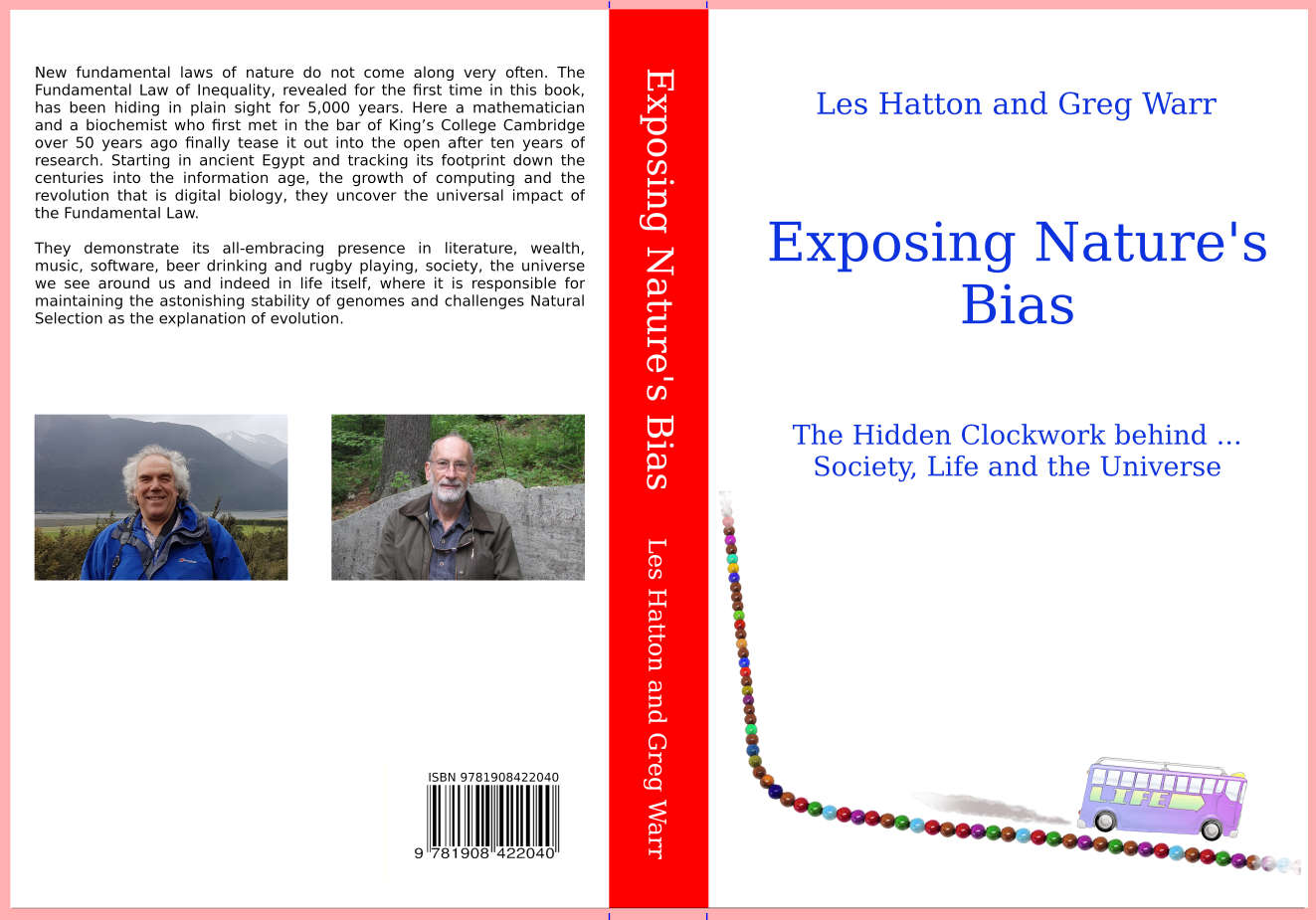
After two years in the writing and ten+ years research ...
|
|
|
|
Mar 2024
|
|
Feb 2024
|
|
Jan 2024
|
| Current contents registered in database
| Courses I give
| Popular shortcuts
|
|
Scientific writing
- Number of books: 6
- Number of invited chapters: 6
- Number of papers: 271
- Number of articles: 63
Other writing
|
|
|
$Revision: 1.67 $, $Date: 2024/01/11 15:04:16 $
|